The Book You Hold Up on the Subway vs. the One You Hide Under Your Pillow
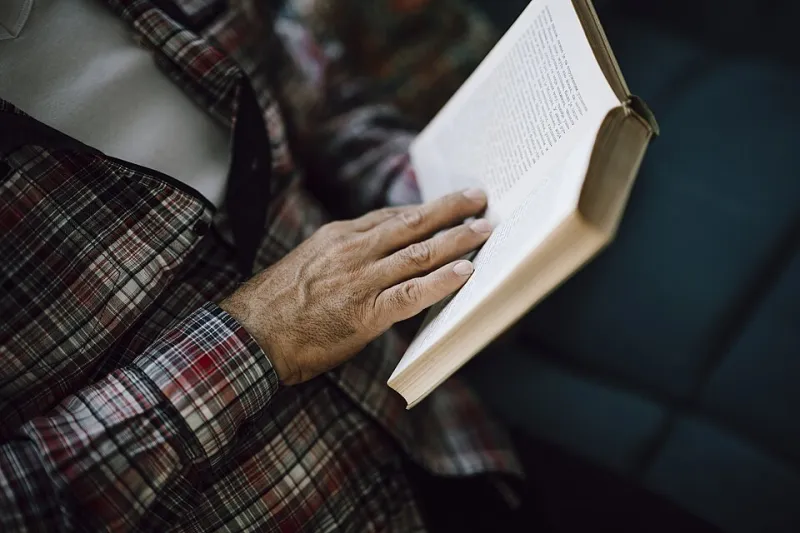
Photo: Nenad Stojkovic, CC BY 4.0, via Wikimedia Commons
Let's be honest: you've looked at someone's book on a train and made a judgment call. Not a harsh one — just a quick calibration. Oh, they're reading that. Interesting. Maybe you've even thought about saying something, then talked yourself out of it. Maybe once or twice, you actually did say something, and it turned into a twenty-minute conversation with a stranger that you still think about.
Books in public are never just books. They're signals. Tiny billboards about who we are, or at least who we'd like people to think we are. And the gap between what we read visibly and what we read privately? That gap is where a lot of our social identity lives.
The Curated Shelf vs. the Real One
Most avid readers, if they're being honest, have two reading lives. There's the one they'd be comfortable discussing at a dinner party — the literary fiction, the acclaimed nonfiction, the titles that signal taste and seriousness. And then there's the other stack: the beach reads consumed in a single sitting, the genre fiction they mainline at midnight, the self-help books they'd rather not explain to anyone.
This isn't exactly a secret. But the why behind it is more interesting than simple embarrassment.
Amy from Philadelphia told us she always carries a "respectable" book in her tote for her commute into the city, even though her actual reading habit at home skews almost entirely toward cozy mysteries and romance. "I know it's performative," she admitted. "But I work in a field where people make a lot of assumptions, and I'm tired of defending what I read for fun. The public book is just... easier."
What Amy's describing isn't insecurity about her taste. It's a very rational calculation about social energy. Public reading is a form of self-presentation, and some days you just don't have the bandwidth to be vulnerable about your actual preferences.
What the Public Book Is Really Saying
Social psychologists who study impression management — the ways we consciously and unconsciously shape how others perceive us — note that visible objects function as conversation invitations. A book with a distinctive cover, a title that's been in the news, or a spine that belongs to a recognizable genre all send different signals to different audiences.
The person reading The Warmth of Other Suns on a park bench is, consciously or not, indicating something about what they find worth their time. Same with the person working through a thick Cormac McCarthy novel at a coffee shop, or the one with a battered copy of The Hitchhiker's Guide to the Galaxy on the subway. None of these are neutral choices.
And people respond to them. Readers who shared their stories with FriendsBook described an almost universal experience: the right book in the right setting had, at some point, started a conversation that turned into something meaningful.
Devin from New York was reading Giovanni's Room at a bar — "I know, I know, it's a whole thing" — when someone slid onto the adjacent stool and said, simply, "That one wrecked me." They talked for three hours. They're still close friends, two years later. "I honestly think if I'd been reading something on my phone, it never would have happened," he said.
The Brave Book and the Hidden One
There's a specific thrill that some readers describe around carrying a book they feel slightly exposed by — not a disreputable one, but a vulnerable one. The grief memoir. The book about anxiety. The novel that deals with something you're quietly going through. Choosing to read that in public is a different kind of statement than carrying literary prestige.
Sophia from Denver told us she started reading a book about burnout and chronic exhaustion openly on her lunch breaks, half-expecting to feel self-conscious. Instead, three different coworkers approached her within a week. "Every single one of them said some version of 'I've been thinking about that book.' One of them bought it that same day. We ended up having a conversation about our jobs that we'd been dancing around for a year."
The visible vulnerable book acts like a permission slip. It tells people: I'm thinking about this thing. You can too.
The Guilty Pleasure Paradox
Here's the twist: the books people are most likely to hide are often the ones that generate the most enthusiastic connections when they're finally revealed.
Romance readers, in particular, described a consistent pattern — years of keeping their reading habits quiet, followed by one moment of just not caring anymore, followed by an avalanche of "oh my god, me too" from people they'd never expected. The shame evaporates fast when you discover that half the people you know are reading the same thing and also not talking about it.
This is one of the quieter things FriendsBook was built around: the idea that the books we love — all of them, the prestigious and the pulpy — are worth talking about openly. Because the connections that form around a shared love of something you were slightly embarrassed to admit? Those tend to go deep fast.
Reading in Public as a Friendship Strategy
None of this means you should start carrying books purely as social props. That would be exhausting, and also kind of beside the point. But it's worth noticing which books you reach for when you leave the house, and asking yourself whether that choice is about comfort, performance, or genuine openness.
Some readers have started thinking about it differently — not as "what book makes me look smart" but as "what book represents something I'd actually like to talk about with a stranger." That reframe changes the calculus. Suddenly the book you've been keeping private because it feels too personal becomes the book most likely to start the right conversation with the right person.
The cover facing outward on a coffee shop table is a small act of social courage. It says: this is what I'm thinking about. Come find me if you're thinking about it too.
Sometimes nobody does. But sometimes they do, and that's how a lot of the best friendships get started — not with a careful introduction, but with a spine facing up on a table and someone brave enough to say something about it.
What's the most public-facing book you've ever carried — and did it lead anywhere? Share your story in the FriendsBook community.