When a Book Blows Up a Friendship — and Why That Might Be the Best Thing That Ever Happened to You
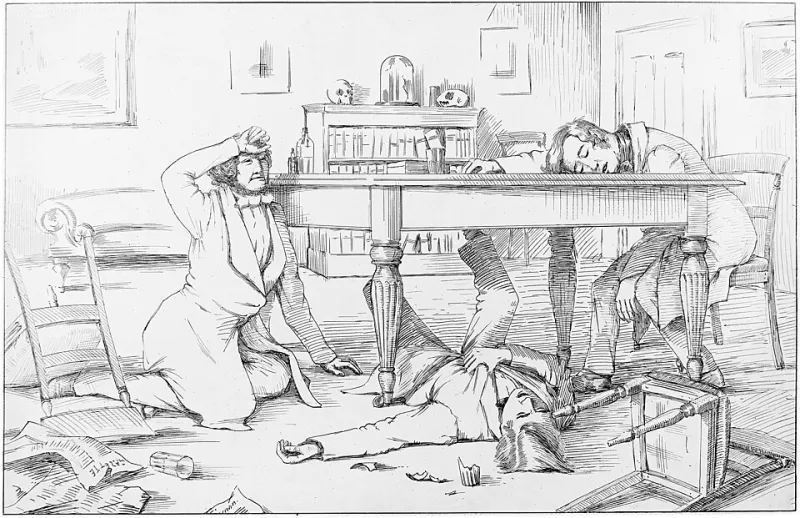
Photo: Unknown, CC BY 4.0, via Wikimedia Commons
You picked it out together. Maybe one of you had been hyping it for weeks, texting voice memos about the plot, dropping hints in every conversation. The other finally caved, bought the paperback, cracked it open on a Sunday afternoon. And then — somewhere between chapter three and the brutal, polarizing ending — everything went sideways.
The discussion turned into a debate. The debate turned into something sharper. Words were said. Long pauses followed. And now there's a copy of that book sitting on a shelf, spine-out, like a quiet little monument to a friendship that hasn't quite recovered.
Sound familiar? You're not alone. At FriendsBook, we hear versions of this story more often than you'd think. And here's the thing nobody wants to say out loud: that book didn't ruin your friendship. It revealed it.
Books Are Basically Friendship X-Rays
When you recommend a book to someone you care about, you're handing them a piece of yourself. Your taste, your values, your sense of what's worth paying attention to in this world. When they read it — really read it — they're not just absorbing a story. They're responding to you.
That's what makes literary disagreements so unexpectedly personal. It's rarely just about the book.
Take American Dirt by Jeanine Cummins, which sparked one of the most heated literary controversies in recent memory. Readers were divided — fiercely — over questions of representation, authorship, and who gets to tell which stories. For some friend groups, discussing it became impossible. For others, it cracked open conversations about privilege and perspective that had been simmering for years.
Or consider something more intimate: a friend recommending a self-help book that implies the other person needs fixing. Or a thriller with morally questionable content that one reader finds thrilling and another finds genuinely disturbing. The book becomes a mirror held up between two people, and sometimes neither of them loves what they see.
The Stories We Don't Talk About
Marissa, 34, from Austin, Texas, describes recommending The Alchemist to her college roommate as "the beginning of the end" of a ten-year friendship. "She thought it was shallow and privileged — this idea that the universe bends to your personal legend. I thought it was beautiful and hopeful. But the more we talked about it, the more I realized we had completely different ideas about personal responsibility, about luck, about what people deserve." She pauses. "The book didn't break us up. It just made visible what was already there."
Daniel, 29, from Chicago, had a different experience. He and a close friend nearly stopped speaking after a brutal disagreement over A Little Life by Hanya Yanagihara — a novel so emotionally intense it has its own reputation for dividing readers. "He thought it was trauma porn. I thought it was the most honest thing I'd ever read about surviving pain. We argued for three weeks. But we came out of it knowing each other way better. That fight actually saved us."
Two books. Two friendships. Two completely different outcomes. The variable wasn't the book — it was what the people involved chose to do with the discomfort.
Why Incompatible Reads Are Actually Doing You a Favor
Here's the uncomfortable truth: most adult friendships in the US operate on a kind of comfortable avoidance. We keep things light. We steer around the heavy topics. We laugh at the same memes and never quite get to what we actually believe about anything that matters.
Books, especially the polarizing ones, have a way of bulldozing through all of that.
When a book exposes a genuine values gap — a difference in how you see justice, empathy, ambition, or morality — you have a choice. You can paper over it, go back to surface-level friendship, and pretend the conversation never happened. Or you can treat it as information.
Relationship researchers and therapists often talk about "rupture and repair" as a core component of healthy, lasting friendships. The idea is simple: relationships that never experience friction don't build resilience. The ones that can survive a genuine conflict — and come out the other side with more honesty between them — tend to be the ones that last.
A polarizing book can be exactly that kind of productive rupture. It forces the question: Do we actually know each other? And do we want to?
How to Navigate the Literary Fallout Without Losing the Person
If you're currently in the middle of a book-sparked friendship crisis, a few things worth keeping in mind:
Give it 48 hours before you respond. Hot takes about a book you just finished are rarely your most nuanced ones. Let the dust settle before you fire off that three-paragraph text about why your friend is completely wrong.
Separate the book from the person. Your friend hating a book you love is not the same as your friend rejecting you. It can feel that way — but naming that distinction out loud can defuse a surprising amount of tension.
Ask more than you argue. "Why did that character's choice bother you so much?" lands differently than "I can't believe you didn't see what the author was doing there." Curiosity keeps the door open. Debate slams it.
Know when the book is a symptom, not the cause. Sometimes a book fight is really a fight about something else — a power dynamic, an old grievance, a growing distance you've both been pretending isn't there. If the argument feels weirdly outsized, it might be worth asking what's actually going on.
Decide what the friendship is worth. Not every friendship is meant to survive every season of your life. If a book reveals that you and someone you care about have fundamentally incompatible worldviews, that's painful — but it's also honest. Some friendships are better honored with space than with forced reconciliation.
The Gift Nobody Asked For
Here's the reframe: the book that cracked your friendship open gave you something most people never get — clarity. You know something real about this person now. You know something real about yourself. That's genuinely rare.
The friendships worth keeping are the ones that can hold a real disagreement and still choose each other on the other side. And sometimes it takes a deeply uncomfortable novel — one that refuses to be neutral, one that demands you take a position — to find out which friendships those are.
At FriendsBook, we believe reading together is one of the most honest things two people can do. Not because books always bring you closer. But because they always tell the truth.
And sometimes the truth is the most generous gift a story can give.


