When Getting Your Books Back Feels Like a Goodbye: The Hidden Grief of the Book Swap Breakup
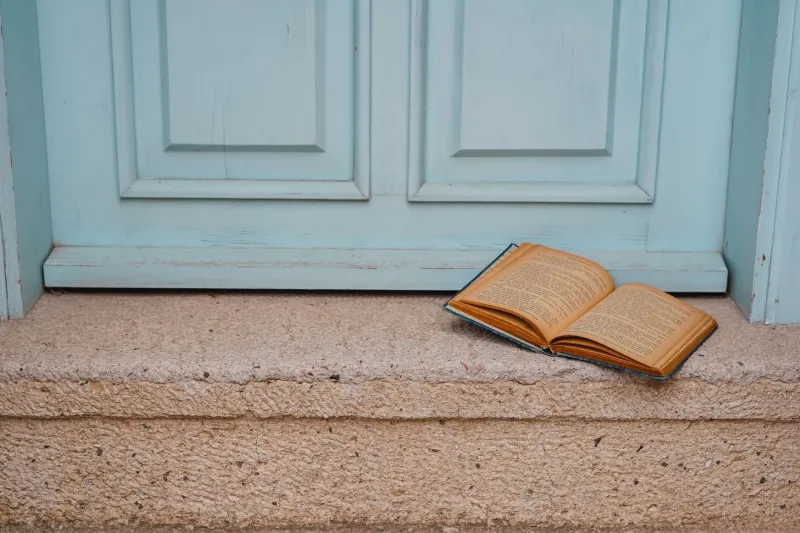
There's a specific kind of dread that settles in when you realize you need to ask a friend for your books back. Not just one book — the books. The ones you handed over with genuine excitement, the ones you said you have to read this about, the ones that were, in some small but real way, pieces of yourself.
It shouldn't feel like a big deal. They're just objects. Paper and glue and ink. But anyone who's ever stood in their own living room, holding a stack of returned novels with a polite smile frozen on their face, knows that something invisible just ended.
Welcome to the book swap breakup — one of the most quietly devastating social rituals that nobody talks about.
Why Lending a Book Is Never Just Lending a Book
When you hand someone a book you love, you're not really handing them paper. You're offering them a window into how you think, what moves you, what keeps you up at night. That's an act of vulnerability, even if it doesn't feel like one in the moment.
Readers have always understood this on some level. Your personal library is a kind of autobiography — the books on your shelves map out who you were at different points in your life, what you were chasing, what you were running from. Lending one out is an invitation for someone else to step inside that story.
So when a friendship cools, and you eventually ask for those books back, you're not just reclaiming property. You're withdrawing the invitation. And both people usually feel it, even if neither one says so.
The Awkward Arithmetic of Asking
Let's be honest: asking for your books back is weird. There's no graceful script for it. Do you text casually and pretend it's no big deal? Do you wait until you're hanging out and bring it up offhandedly? Do you just quietly grieve the loss of The Goldfinch and move on?
For a lot of people, the answer ends up being option three. According to informal surveys shared in reading communities across Reddit and Goodreads, a significant chunk of readers admit they've simply written books off rather than endure the discomfort of asking for them back — especially from friends they've grown distant from.
And that silence has consequences. Every time you scan your shelf and notice the gap, you think about that person. The book's absence becomes a placeholder for the friendship's absence. It's a small, recurring grief that most of us never name out loud.
Real Readers, Real Reckoning
Marcella, a 34-year-old librarian from Portland, Oregon, describes the moment a college friend dropped off a box of her books as "surreal and weirdly final."
"We'd been drifting apart for about two years," she says. "But the day she left that box on my porch without even knocking — that was when I knew it was really over. Those books had been at her place longer than some of my actual relationships. Getting them back felt less like getting something and more like losing something."
Jordan, 28, from Atlanta, has a different take. For him, asking for his books back was actually the moment he realized the friendship had already been over for a long time — he just hadn't admitted it yet.
"I texted my old roommate about returning a few titles I'd lent him over the years," he says. "His response was so cold and transactional. That's when it hit me. I wasn't upset about the books. I was upset because the way he handled it confirmed what I'd been avoiding thinking about."
These stories aren't unusual. In book-loving communities, the returned-book moment has become a kind of shorthand for friendship endings — a concrete, tangible event that gives shape to something that otherwise might have just dissolved quietly into nothing.
The Psychology Behind the Sting
So why does this hit so hard? Psychologists who study object attachment suggest that personal items — especially ones tied to identity and memory — take on what's sometimes called "extended self" status. In other words, your books aren't just books; they're part of how you understand yourself.
When you lend one to a friend, that extended self travels with it. The book sits in their space, maybe gets read, maybe gets dog-eared, maybe sits on a nightstand for months. It lives inside their life for a while. When it comes back, it's been somewhere. It carries the ghost of a friendship that may no longer exist in the same form.
There's also the element of unspoken expectation. Lending a book often comes with the silent hope that your friend will read it, love it, and come back wanting to talk about it. When that conversation never happens — and especially when the book returns without a single word about it — that unfulfilled hope stings in a way that's hard to articulate.
When It Goes the Other Way
Not every book return is a funeral, though. Sometimes, getting your books back is actually clarifying in the best possible way.
Some readers describe a kind of relief when they finally reclaim their shelves — a physical act of moving on that helps them emotionally move on too. There's something almost ceremonial about it. You're taking back your story. You're choosing yourself.
And occasionally, the book return opens a door rather than closing one. A few readers shared stories about reaching out after years of distance, using books as the excuse, and ending up in a two-hour phone call that reignited a friendship they thought was gone for good. The books became a bridge instead of a barrier.
What Your Shelf Is Actually Telling You
If you've got gaps in your library right now — spaces where titles used to live before you handed them to someone you're no longer close to — take a second to sit with that. Not to spiral, just to notice.
Those gaps are a record of the connections you've made, the trust you've extended, the parts of yourself you were willing to share. Even when a friendship ends, that generosity meant something. The fact that it hurts to get those books back is proof that the relationship was real.
At FriendsBook, we believe that reading is one of the deepest ways humans connect — and that the books we share with people are some of the most honest things we ever give them. So yeah, getting them back can feel like a breakup. Because in a way, it kind of is.
But your shelf will fill up again. And so will your life with people worth lending to.