The Generous Reader's Dilemma: Why We Keep Giving Away Books We Haven't Read Yet
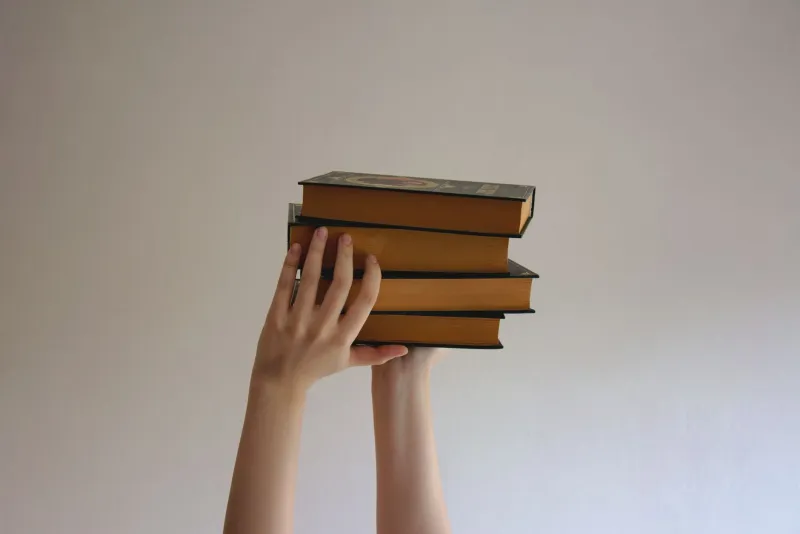
There it is, sitting on your nightstand. You grabbed it at the bookstore three weeks ago because the cover caught your eye and the back copy gave you chills. You've been saving it — waiting for the right weekend, the right mood, the right cup of coffee. And then your friend texts you, completely out of nowhere, asking if you know any good psychological thrillers.
You know what happened next.
You handed it over. You gave away the book you bought for yourself before you'd even cracked the spine. And now it's sitting in someone else's apartment, possibly buried under a pile of their own unread books, while you're left staring at the gap it left on your shelf.
If this sounds painfully familiar, you are absolutely not alone.
The TBR Pile Is a Fantasy We're Weirdly Willing to Share
For most devoted readers, the to-be-read pile isn't just a stack of books — it's a vision board. It represents the reader you're planning to become, the conversations you're going to have, the worlds you haven't visited yet. Every unread book is a tiny promise you've made to yourself.
So why on earth do we keep giving them away?
Part of it comes down to how we value connection over consumption. When a friend expresses interest in a book — especially one you haven't read yet — there's something almost electric about being the person who can put it in their hands. It feels generous. It feels meaningful. For a community of readers who bond over stories, sharing a book is practically a love language.
But there's something else going on too. The book you haven't read yet exists in a kind of idealized state in your mind. You imagine loving it. You assume it'll be great. And when a friend seems like the perfect match for it, you almost want them to experience it first — like you're sending a scout ahead to confirm your instincts.
Spoiler: this logic is deeply flawed and yet completely understandable.
Real Readers, Real Regrets (and Real Non-Regrets)
We asked our FriendsBook community about the books they'd lent out before reading, and the responses ranged from bittersweet to genuinely chaotic.
"I bought Tomorrow, and Tomorrow, and Tomorrow the week it came out," one reader from Chicago admitted. "My coworker mentioned she was in a reading slump, and I just... handed it to her in the break room. I still haven't read it. That was two years ago. We don't even work together anymore."
Another reader from Austin had a different take: "I gave away my copy of Demon Copperhead to my sister before I finished chapter one. She called me crying when she finished it. That phone call was better than reading it myself would've been. I regret nothing."
And then there's the reader from Seattle who summed up the whole phenomenon perfectly: "I have a rule now. I buy two copies of anything I think I'll want to share. I've broken that rule approximately one hundred percent of the time."
The Psychology Behind the Sacrifice
There's a term in behavioral psychology called "present bias" — the tendency to overvalue immediate rewards over future ones. When your friend is standing right in front of you, visibly excited about a book you're holding, that present moment of connection feels more compelling than the future version of yourself who was going to read it quietly on a Sunday afternoon.
Books, more than almost any other object, are designed to be shared. They carry ideas, emotions, and perspectives that feel incomplete when they stay with only one person. There's a reason we talk about books "finding" their readers — and when you match a book to a friend at exactly the right moment in their life, it can feel like you've done something genuinely important.
That impulse isn't something to be ashamed of. It's actually one of the more beautiful things about being a reader.
But the FOMO is real too. Every book you lend away is a story you've deferred, a conversation you've delayed having with yourself. And if the book doesn't come back — which, let's be honest, is a statistically significant possibility — that conversation might never happen at all.
The Ones That Got Away
There's a specific kind of grief that comes with losing a book you never got to read. It's not quite the same as losing a book you loved. It's more like losing a relationship that had potential — a "what if" that got away before you ever found out the answer.
Some readers handle this by replacing the lent copy, which works fine except for the part where it feels slightly hollow. The new copy isn't the one you chose. It doesn't have the receipt from the bookstore tucked in the front or the slight crease in the spine from being in your bag.
Others lean into the loss, treating it as proof that the book found a better home. This is the healthier perspective, probably. It's also a little easier to maintain when you've got forty other unread books waiting in line.
A Few Loose Rules for the Chronically Generous Reader
If you recognize yourself in any of this, here are a few loosely held guidelines that might help — though we fully expect you to ignore them the next time a friend looks at you with book-shaped longing in their eyes.
Read the first chapter before you commit. Even ten pages in gives you a sense of whether you're truly invested. If you are, maybe hold onto it a little longer. If you're not, send it off with a clear conscience.
Set a return window out loud. Saying "I haven't read this yet, so can you get it back to me in a month?" isn't rude — it's honest. Most friends will respect it more than a vague, passive-aggressive follow-up text six months later.
Keep a lent-books list. There are apps for this, or you can go old-school with a notes app. Knowing where your books are reduces the ambient guilt considerably.
Accept that some books are meant to travel. Not every book is destined to live on your shelf forever. Some of them are just passing through, using you as a waypoint on the way to the person who actually needed them.
The Part Where We Admit It's Worth It
Here's the truth, though: most of us who've given away a TBR book and watched it disappear into a friend's life don't actually regret it — not deeply, not permanently. The moment of connection, the look on someone's face when they realize you thought of them, the text you get three weeks later when they finish it and have feelings — that stuff matters.
Reading can be a solitary act, but the best parts of being a reader are almost always communal. That's kind of the whole point of FriendsBook, honestly. Stories are better when they're shared, even when — maybe especially when — you share them before you've had the chance to keep them for yourself.
So yes, you'll probably do it again. You'll buy something for yourself, fall in love with the idea of it, and hand it to a friend the moment they seem like they need it more than you do.
And you'll be fine with that. Eventually.